Autonomous electronics and chip design.

Autonomyware is AI engineering for electronics: AI PCB design that takes one prompt to a specified, drawn, placed, routed and checked board, with a verified fabrication release and the board in 3D. Built from catalog parts, or around a chip invented for the job.

  • Specification
  • Schematic
  • Placement
  • Routing
  • Checks
  • Fabrication release

From one prompt to a fabrication release.

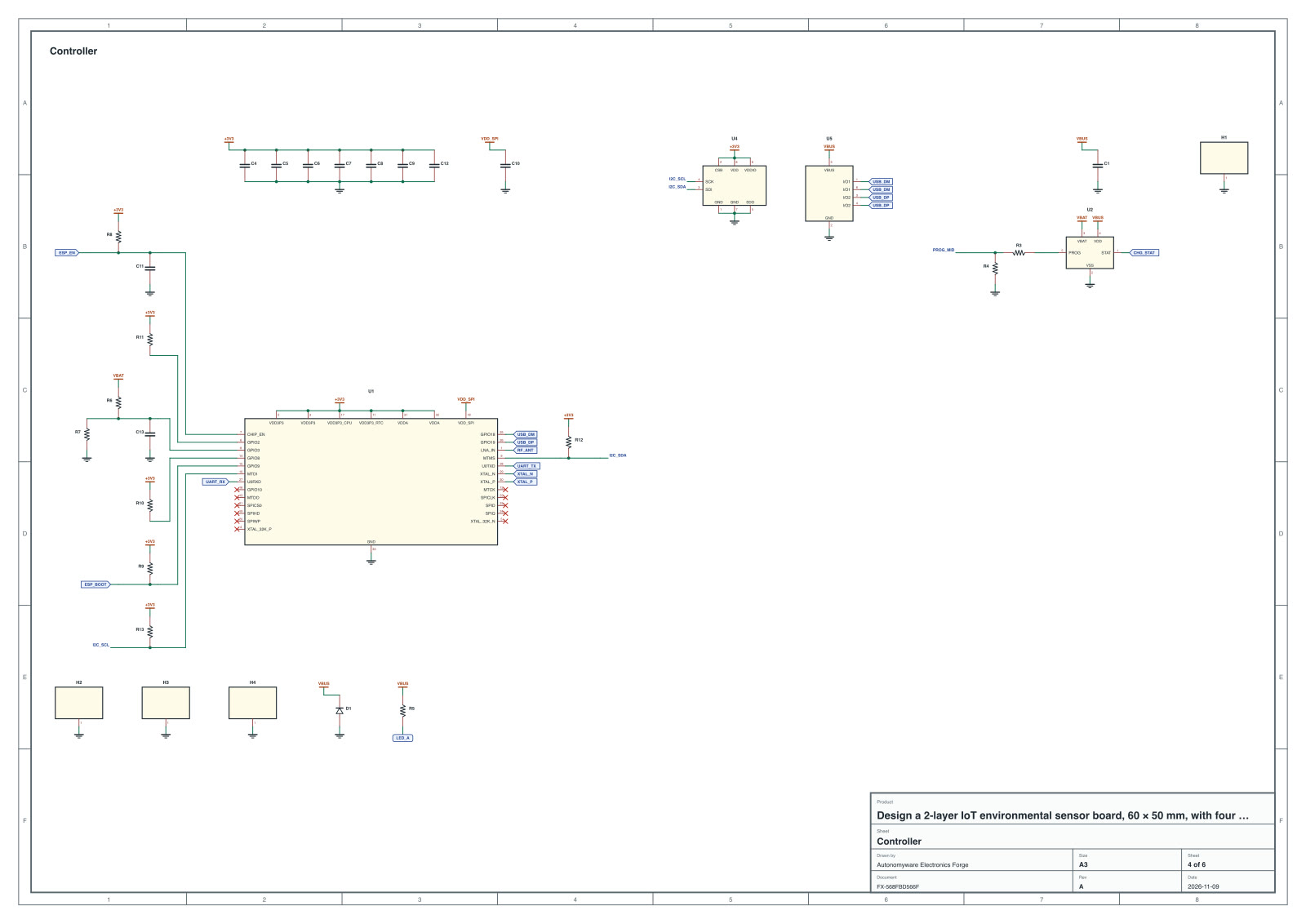
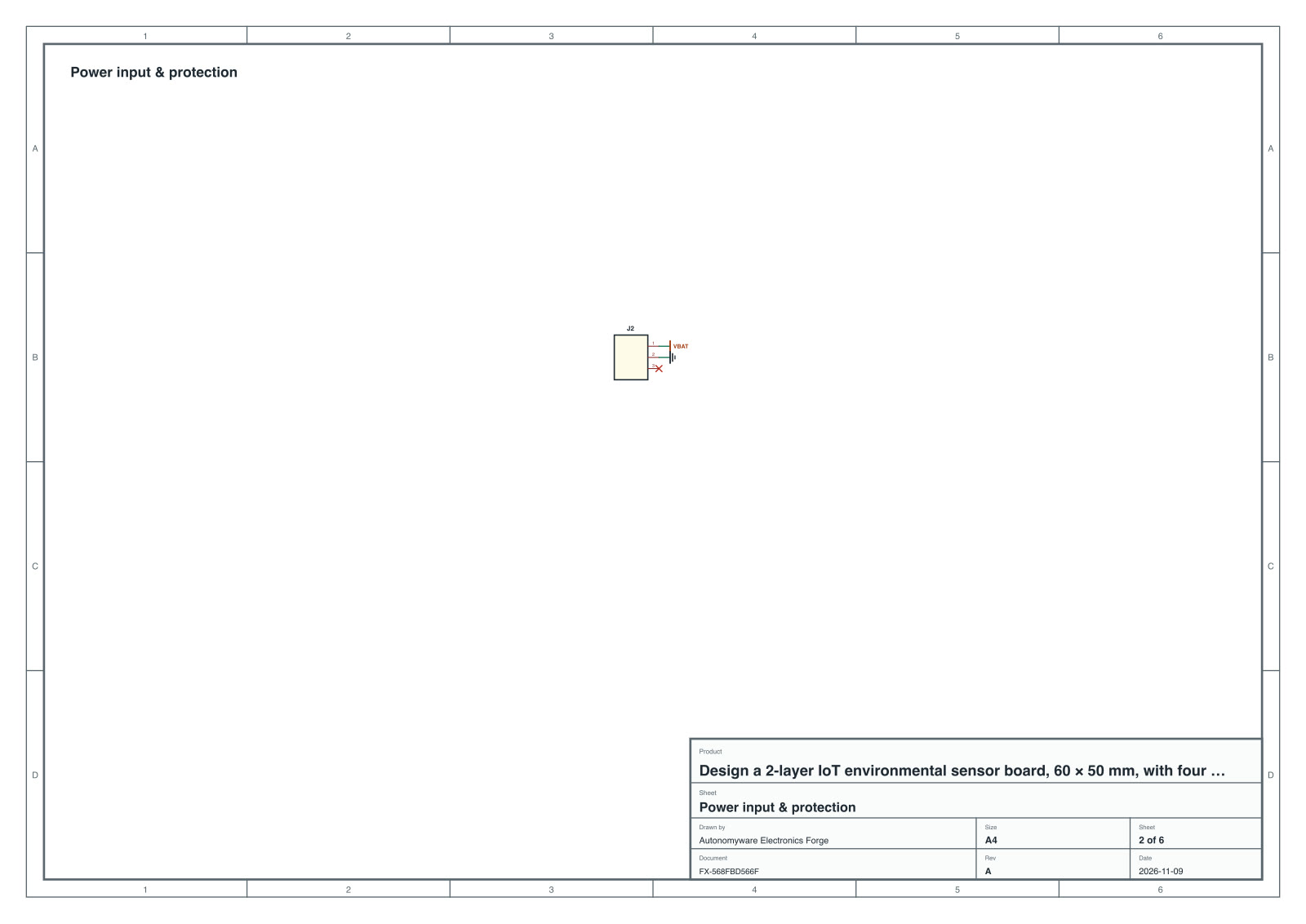
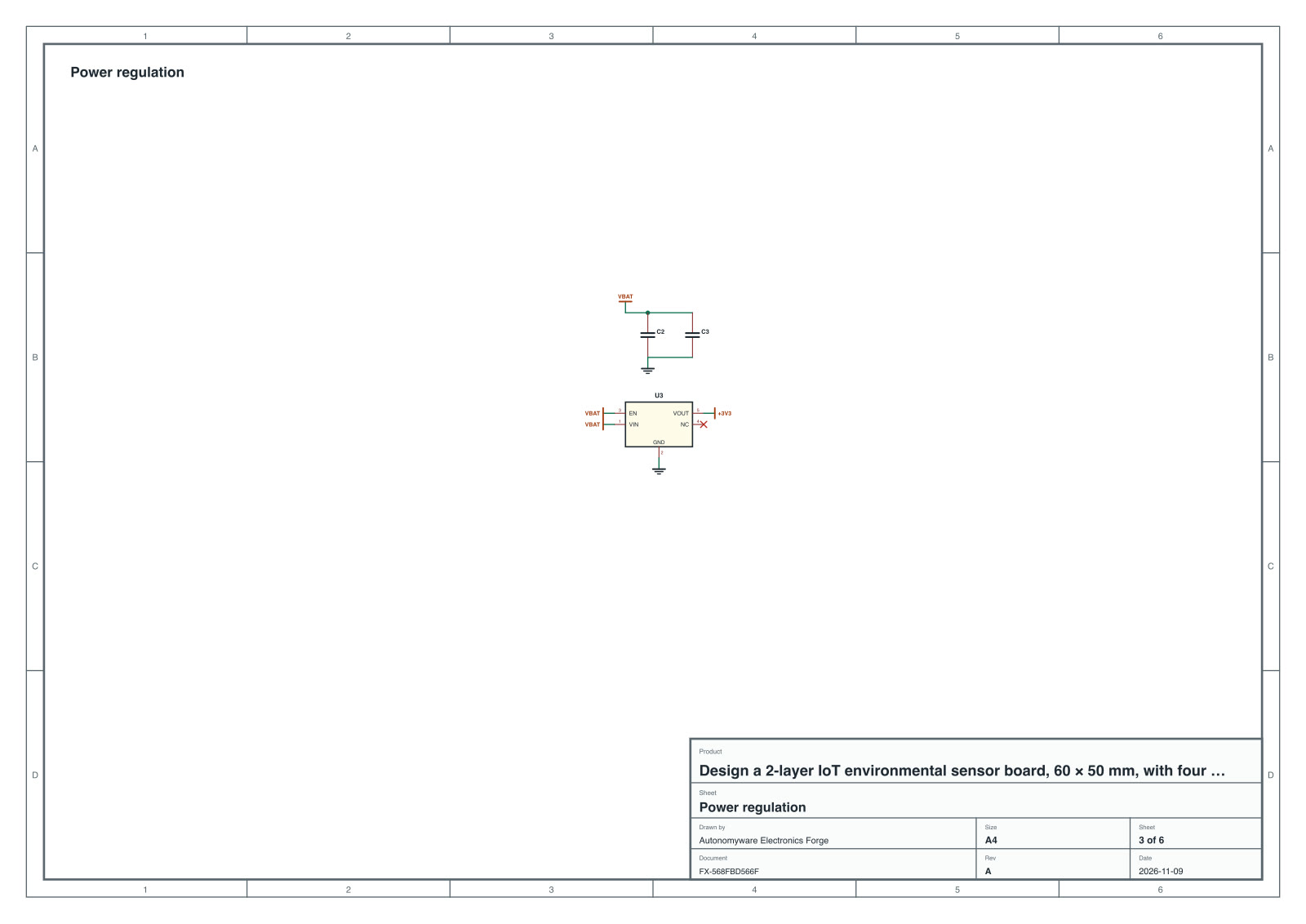
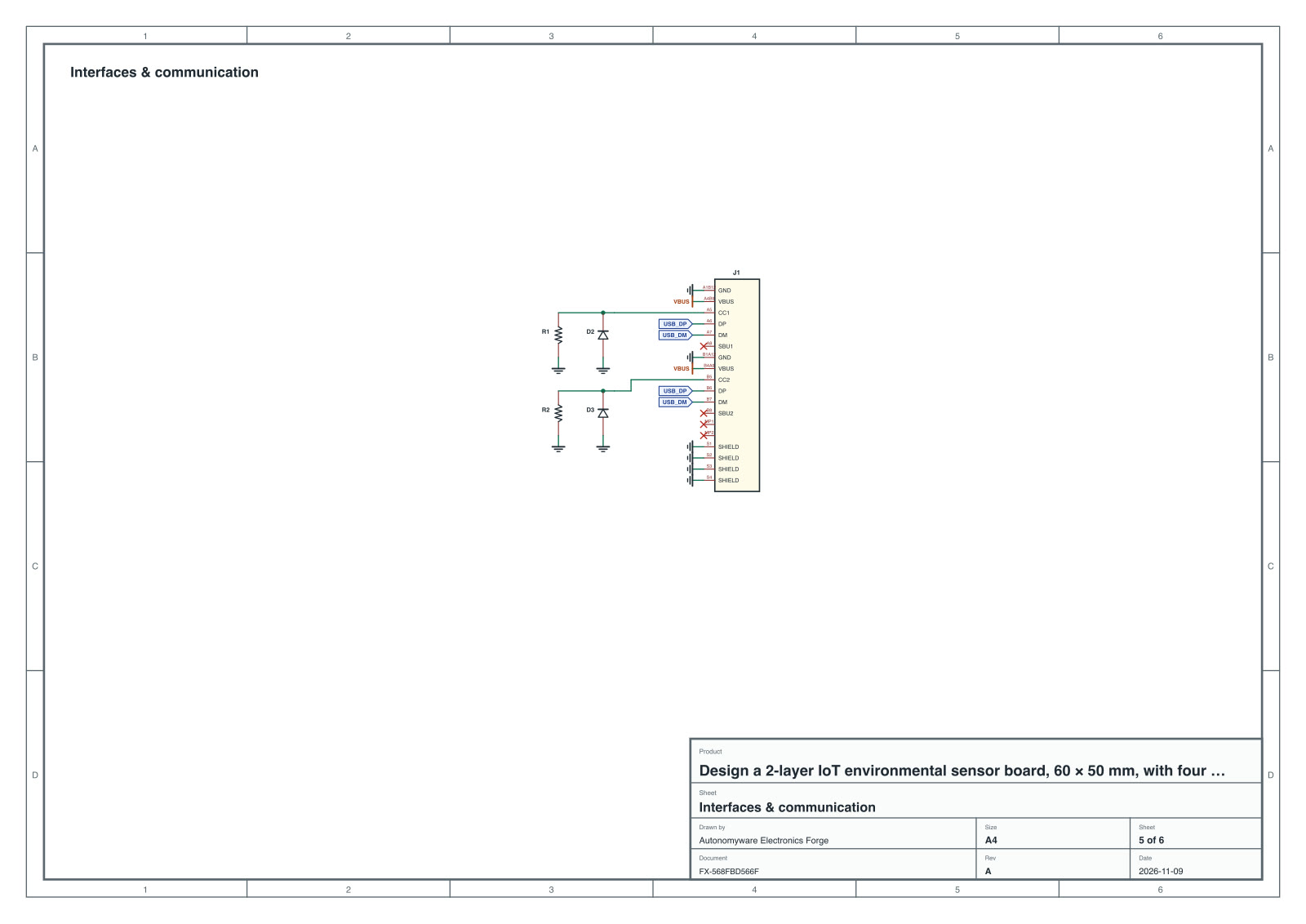
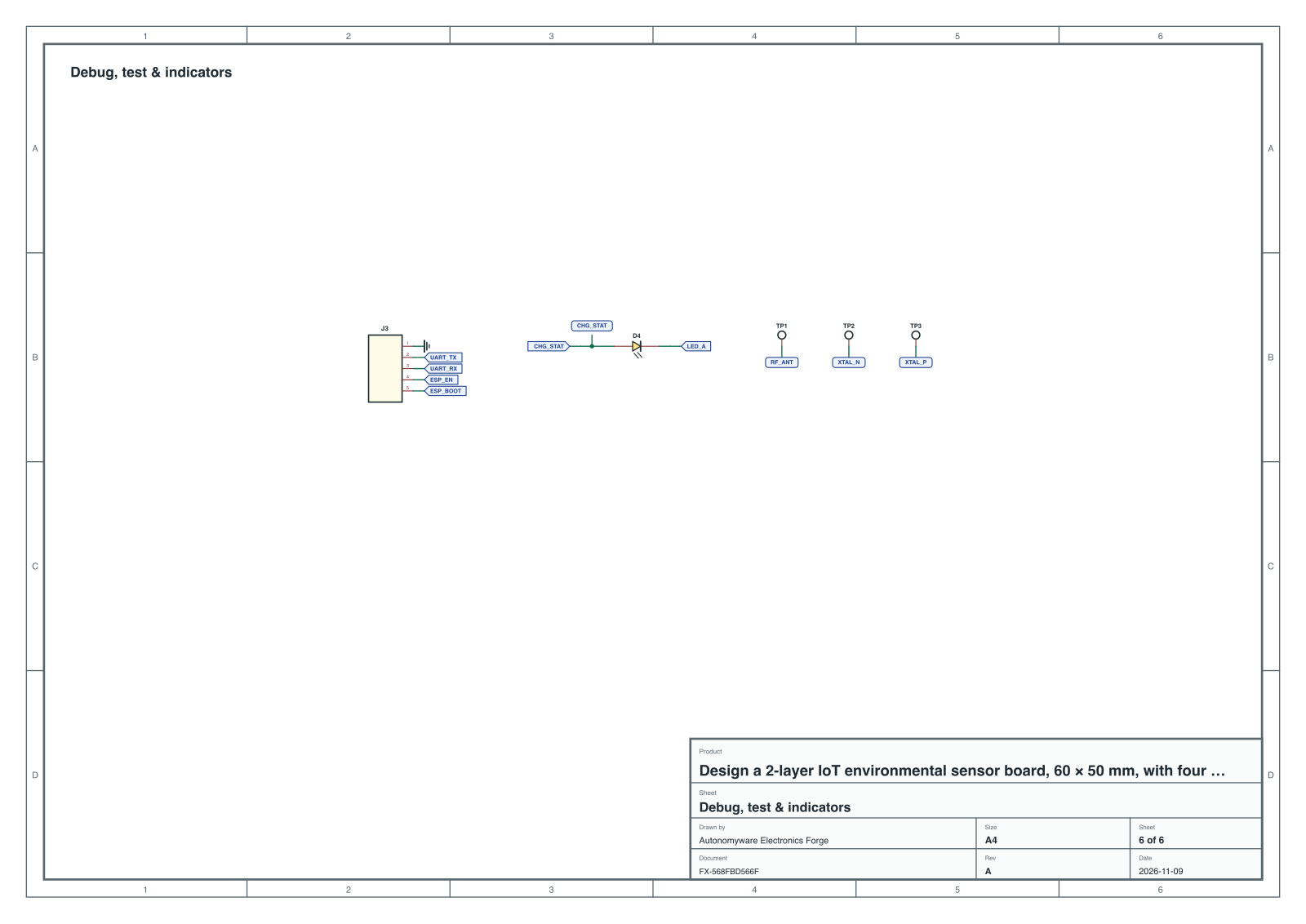
Every stage below is real output from the electronics workspace, shown on two of our boards: a dual-channel BLDC motor controller and a 2-layer IoT environmental sensor board.

The prompt “CREATE A Dual-channel BLDC motor controller with CAN-FD” typed into the app

Say what the board must do.

One sentence is enough to start; a detailed brief with sizes, connectors and power is better. The Forge reads it as a specification, not as a picture to draw.

  • Shown“CREATE A Dual-channel BLDC motor controller with CAN-FD”
  • Also acceptedsizes, layer counts, connectors, mounting holes, power budgets

Boards engineered in Autonomyware.

Nine real boards from our workspaces, live in your browser. Pick one and drag to turn it.

Dual-channel BLDC motor controllerThe board from the product film: 181 parts placed on a 4-layer board.Drag to turn · scroll to zoom

When no part fits, invent the chip.

Describe the function, pins, package and clock, and the chip is designed and placed on its own evaluation board, so it can be powered, programmed and measured.

  • Function, interface and clock from the prompt
  • Package and pinout chosen for the board
  • An evaluation board around it, ready to route
The Autonomyware workspace showing several PCB designs side by side

All your boards side by side.

Every board and chip keeps its history, its checks and its exports, next to the mechanics and software of the product it belongs to.

Watch the pipeline run.

Full runs, recorded in the app.

PCB design from one prompt: 4-axis stepper motor controller

One prompt to spec, schematic, layout and a routed 4-layer board. Watch the Forge think, catch its own mistake and route 125 nets.

Watch on YouTube ↗

Custom chip: a PWM controller, designed from a prompt

A custom digital chip with 8 PWM channels, 16-bit resolution and an I²C interface in QFN-32, placed on its own evaluation board.

Watch on YouTube ↗

Videos play from YouTube's privacy-enhanced player, only after you press play.